August 2022 – Mary Pettit, M.Ed., NBCT
Dear Fellow Educators and Educational Leaders,
As I begin my 25th year as a classroom teacher, I am reminded that no matter how many years experience I have, I will always feel like a brand new teacher. In a positive sense, I still get butterflies when I meet my brand new group of impressionable 5th graders, crack open that box of freshly sharpened pencils, and set aside my first day of school outfit (yes, I still get a thrill from school clothes shopping). However, the nervous flutter in my stomach can also be caused by the mounting feeling of pressure to implement new curriculum standards or initiatives. Feeling like a brand new teacher most definitely keeps me on my toes!
Picture this…you enter the auditorium, library, or cafeteria (wherever the first day of school staff meeting is being held), you are dressed in your best first day of school outfit and armed with the best mechanical pencils that amazon had in stock. Just as the first staff meeting of the year is about to begin, you hear it… At first, soft whispers and buzz words begin to grab your attention (*curriculum*, *mandates*, *initiative*) are followed by louder whispers and frustrated sighs that seem to replace the excited flutter in your stomach for new school year beginnings. If you are an educator or an administrator and this scenerio resonates with you in any way, you know exactly what I am talking about. THE NEWEST initiative…*gasp*, *sigh*!
In the past few years, the newest “I can” statement initiative has attracted a lot of negative criticism which led me on an inquiry and research based journey to uncover the truths. I hope when you are finished reading this post you will, at the very least, feel empowered and inspired to think about “I can” statements with intentionality.
We must be intentional in redirecting our brain when there is no actual danger. Look for the positive-
NOTICE THE GOOD THINGS.
Alexandra Eidens
First I want to break down the definition of an “I can” statement and review the intended role in the classroom. According to MacDuff and Linse (2010), “I can” statements allow students to produce their perceived abilities. Coaching students to understand the purpose of their work (the why) and what they need to do to get there (the how) can be a powerful way to foster agency and autonomy. When beginning a unit with the end goal in mind, students can begin thinking about their current level of understanding and self-monitor their learning as they work toward attaining that end goal. MacDuff and Linse state that “this approach is most effective when students are given a target so that even before they begin, they have a sense of what they are expected to accomplish” (p. 2).
A.J. Juliani, educator, best selling author of the PBL Handbook, and educational blogger describes a revolutionary way to reverse engineer any goal with a backwards design approach that empowers learners to succeed, feel efficacious, and have high expectations of themselves. Backwards engineering starts with the end goal in mind and a plan or map for the best way to get there. If you are interested in learning more about this approach and how to align it with current initiatives visit A.J. Juliani’s blog and listen to his amazing podcasts.
So let’s pause and think about how we can relate this process to our own life experiences…
- When we diet…we start with our end goal in mind. We set a weight loss or exercise goal and oftentimes record our progress and make adjustments as needed, always keeping our end goal in mind.
- When we cook…we start with our end goal in mind. We search for a recipe, print it out, and begin recording what ingredients we need. We follow the recipe step by step and we even sprinkle in our own personal touches, always keeping our end goal in mind.
- When we play a competitive sport…we start with the end goal in mind. We listen to the coach describe what it will take to win, to set personal bests, and to get to the next level. We watch other expert players to emanate their effort, we study play books, watch videos, participate in drills, always keeping our end goal in mind.
If we naturally begin with the end goal and reverse engineer a plan in our everyday lives, why does it often times feel so unnatural in our classrooms? I mean, I am completely guilty of haphazardly scrawling the “I can” statement on a post it note and sticking it to the smartboard so when an administrator does a walk-through, they can’t say I didn’t display it. Frustrated at feeling like this became “busy work” for teachers, I grew more and more frustrated. I started thinking I missed something. Did I miss a PD or an email about this? For most of us, including administrators, who are also on the haphazard receiving end of new initiatives, the original intention of any initiative gets lost in translation and by the time it makes its way down, it feels like “something else we have to do”.
I swore to myself at the end of the last school year, I will no longer display the “I can” statement in my class “because I was told to do so” when it feels like it makes no sense. Instead, I vowed to empower myself through research, trial and error, and knowledge acquisition so that I can be ready to defend my classroom practice and feel confident that I am doing what’s best for kids.
I am hoping that after reading up to this point, something I shared resonated with you and maybe you are beginning to think about “I can” statements a little differently. That would be great news! However, I can relate to you if you are thinking, “ok, but how does that actually LOOK in a classroom?” Well, I am SO happy you asked 😊. After a summer long inquiry on this topic, I am excited to share with you some ideas for implementation!
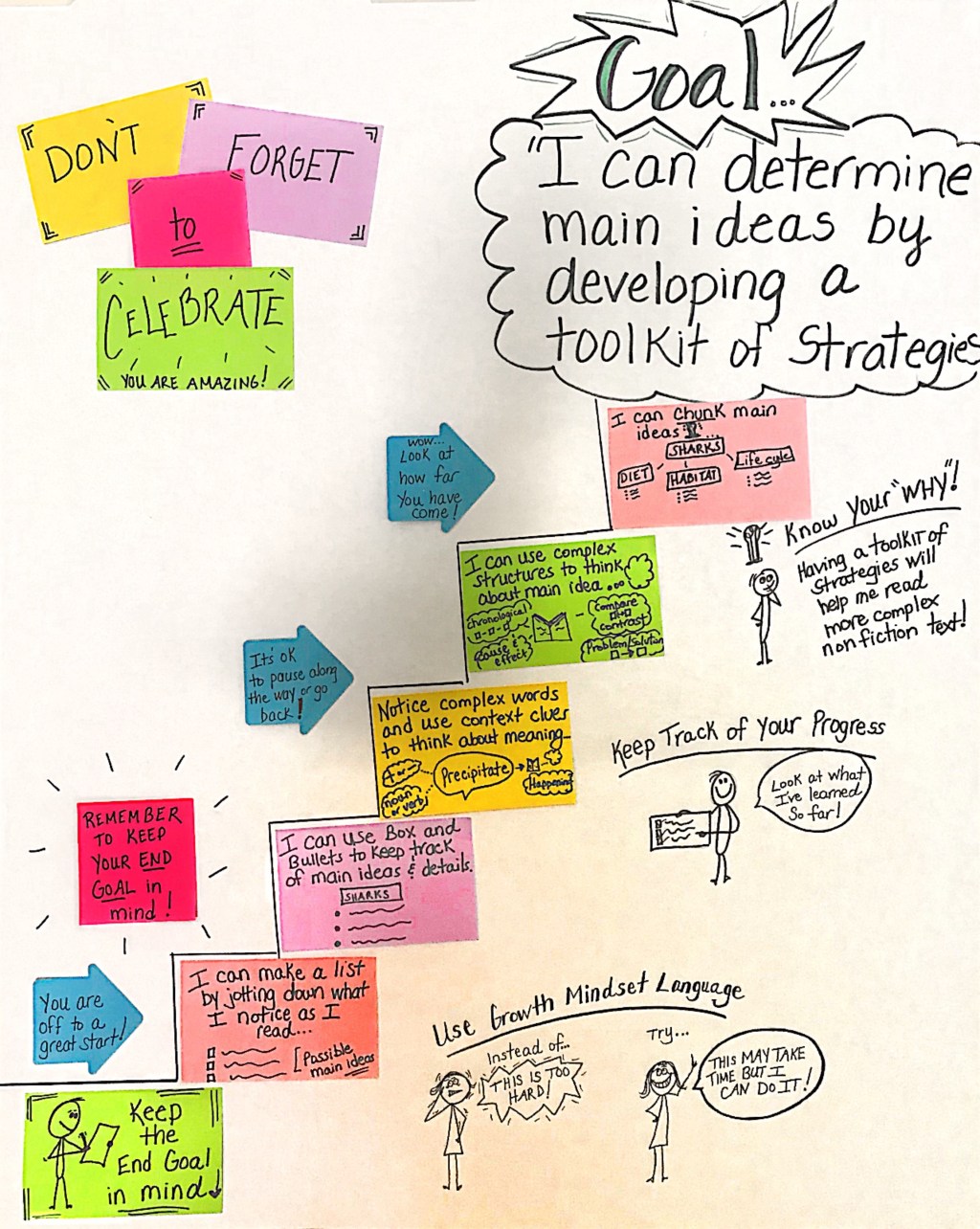
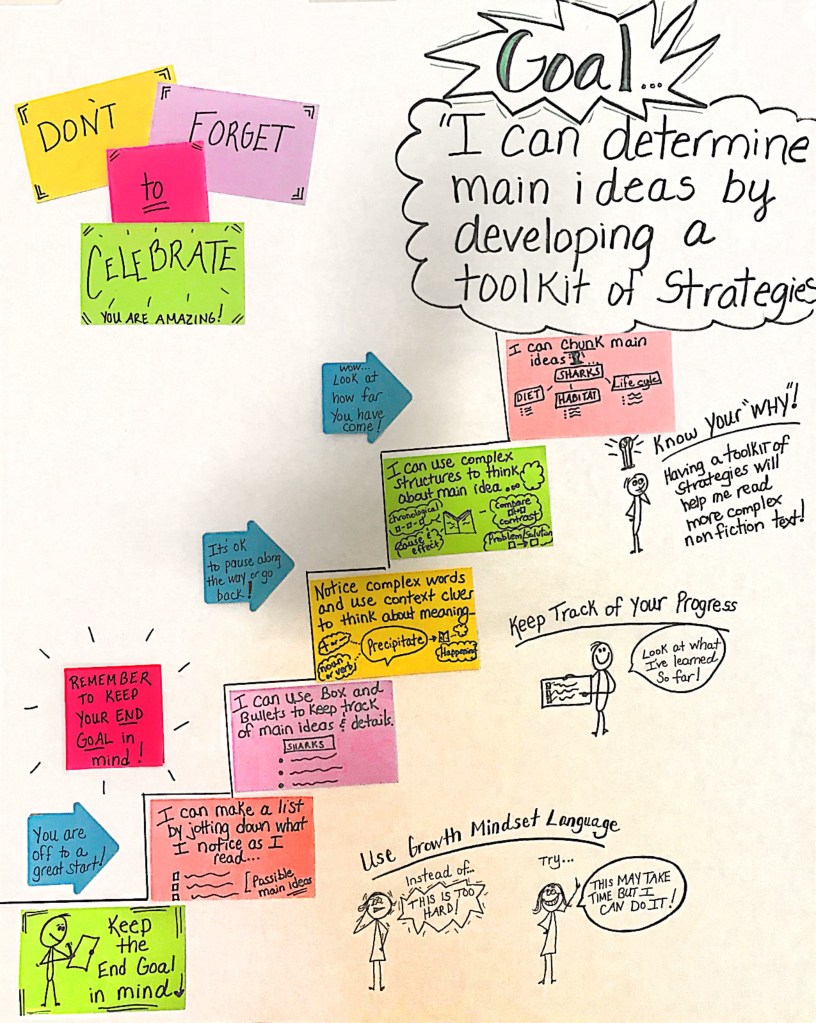
This anchor chart is a culmination of my ideas on how to effectively use “I can” statements with my upcoming fifth graders. Keeping the end goal in mind and reverse engineering a plan to succeed will give ownership over learning where it belongs…the students. Ideally, this anchor chart is meant to be created by the kids as they reflect on each strategy practiced. When they feel confident enough to move on to the next strategy, they will be able to articulate why. I look forward to modeling this process with my class in a few weeks and I will keep you updated. Keep a look out for vlog (video blog) posts! As always, if you have tried this in your class and would like to share how it went or have ideas of your own to share, please leave a comment!
Have a great year everyone.
Sincerely,
Mary Pettit, M.Ed., NBCT
 Universal Digital Literacy Solutions, LLCoo IPO IPO oooooòoo ooo o ooo I I I ooo ooo I iio
Leave a comment