
~October 2, 2022 Mary Pettit, NBCT, Ed.D
Dear Readers,
If you are an educator in the primary grades, most likely the first writing unit of study is “personal narrative”: a small moment that puts each child in the center of their story as the main character. As a veteran teacher of 25 years, I am confident I can predict how this generally looks in most classrooms around the country (including mine). After you read what I envision and experience below, if you can relate, I invite you to continue reading about a teaching and learning strategy that I recently discovered and has changed the way I approach this unit of study.
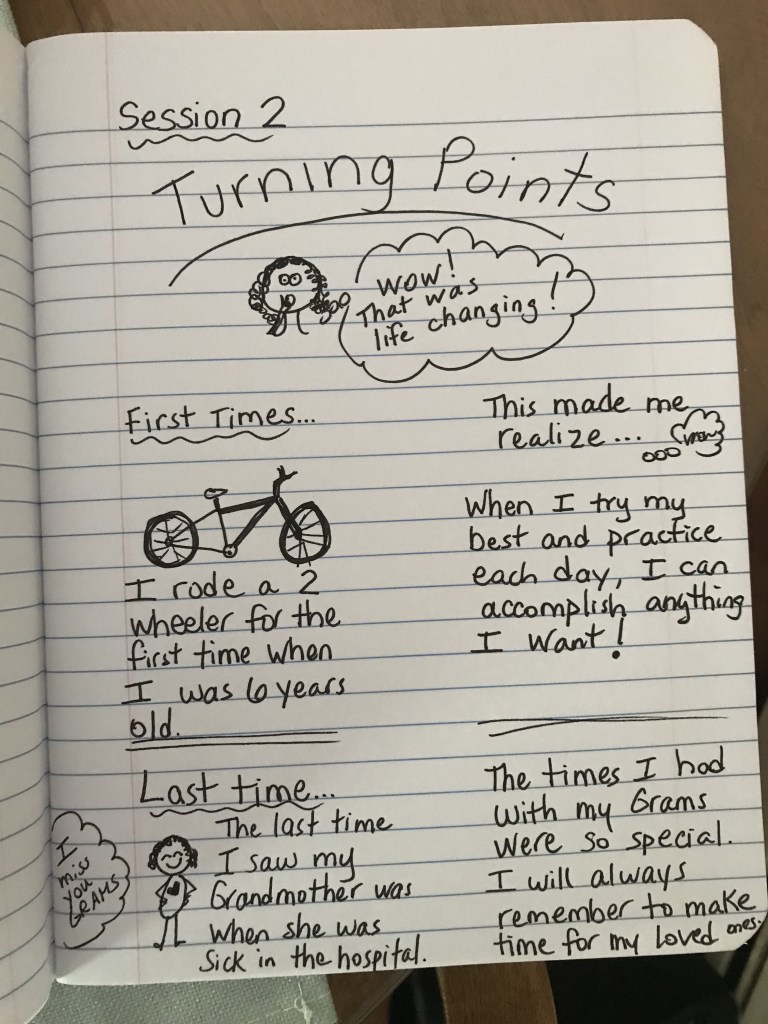
Week 1: “What is a seed story?” This week, I introduce ways to generate ideas for personal narratives that include: think of an important person or place and a small moment special to you, a first or a last time and the turning points or lessons you learned from the experience, or ways another author can inspire ideas of our own. This week proceeds generally well as kids will most likely list important people, like close family or friends, vacation spots like Disney World or the beach, and first and last times like “the first time I got a new puppy”, or the “last time I saw my grandmother”. Armed with many seed ideas for personal narratives we jump into week 2 with both feet!

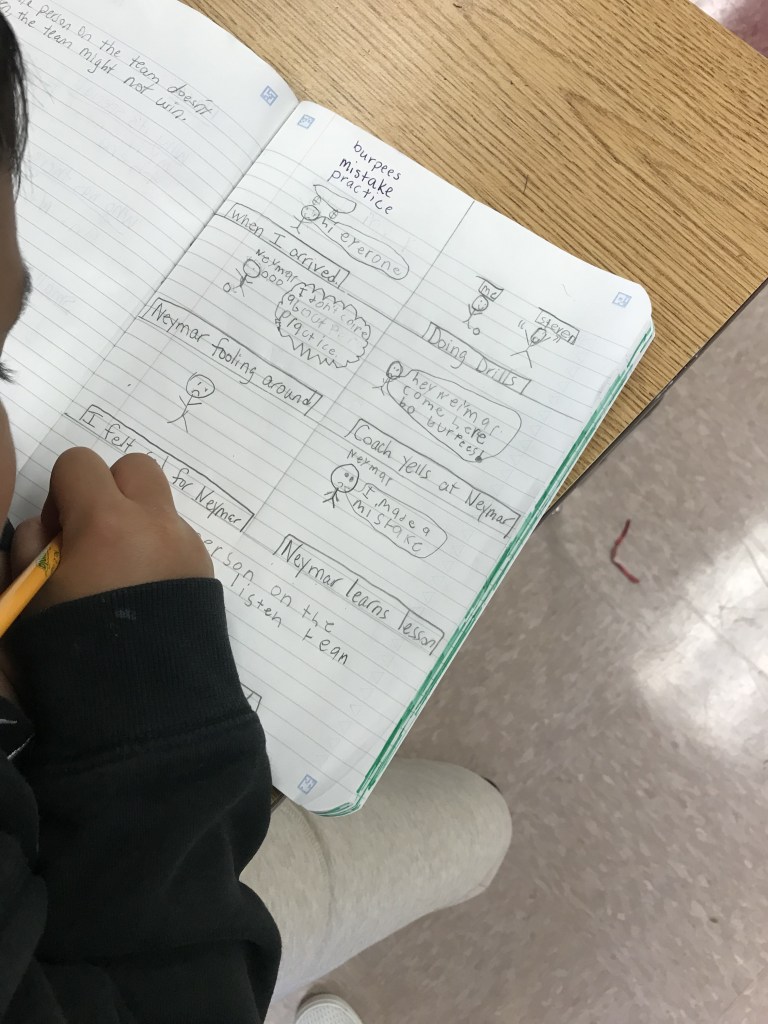
Week 2: Time to draft! Suddenly, you feel anxious about your writing workshop period. You are probably remembering the difficulty your students had over the years transitioning into this week. You will most likely hear, “Can I go to the bathroom?”, or “I don’t know what to write”, or after 4 minutes of “drafting”…”I’m done”. Frustrated and feeling incompetent, you begin conferring with students 1-1 and in an effort to guide students into “telling you their story”, you may “tell them what to write” or have them copy it on to their own page. After 40 minutes of writing, you might get to confer with 2 students. When you look around the room at the other students waiting for your help, you realize the sound you hear is the moaning and groaning of the others who are staring at a blank page. The next day, you are excited that the fire drill went off just as you were about to begin writing. Week 2 continues and you are sweating it out thinking that you have only a few weeks to teach the remaining minilessons, how to revise and edit, and then…*sigh* yep…you guessed it…PUBLISH all of the personal narratives so you can hang them in the hallway before beginning the next unit.
Week 3-6: Repeat. A handful of students have drafted, practiced and incorporated all of the strategies from your minilessons, revised and edited, and illustrated their published pieces. When you hear them ask, “I’m done, what do I do now?”, you realize that the other 18 students are at so many various stages of this process and you have no idea who to help first or at what point “helping” turns into “doing it so they can copy and finish”.
Final week: 20/25 personal narratives hang in the hallway. These published pieces demonstrate all of the mini-lessons you have taught for the past 5 weeks including beginnings that hook the reader, proper use of dialogue, “show don’t tell” descriptions”, and proper use of punctuation and capitalization thanks to the 1-1 conferring where you were able to offer them the necessary “help”. When you line up your class for lunch or special, they don’t even glance in the direction of their narratives. They don’t seem excited about their work or feel efficacious about their writing, but you are SO glad to put that unit behind you…until next year. UGH.
If you decided to continue reading this, most likely what you read so far resonated with you. I feel you. This has been my routine for so many years. Despite all of the PD I attend, the books I read, the Pinterest boards I save…this unit always seems to look like this for me. However, this past summer I came across a podcast that completely changed the way I approached writing instruction!
What is Backward Chaining?
Backward chaining is a specific kind of scaffolding that has the student begin a task closer to the end, rather than starting it from the beginning.
Melanie Meehan
While Backward chaining is a strategy often associated with teaching a life skill like “how to brush your teeth” or “how to tie your shoe”, the theory behind identifying the end result and providing students with different points of entry into the writing process provides equitable access and autonomy for all students.
In an amazing podcast on Cult of Pedagogy, Jennifer Gonzalez interviewed Melanie Meehan, a Connecticut-based elementary writing and social studies coordinator who has written three books about teaching writing and contributes to the phenomenal collaborative blog Two Writing Teachers. This podcast changed the way I think about the writing process and has renewed my confidence as a teacher and a learner.
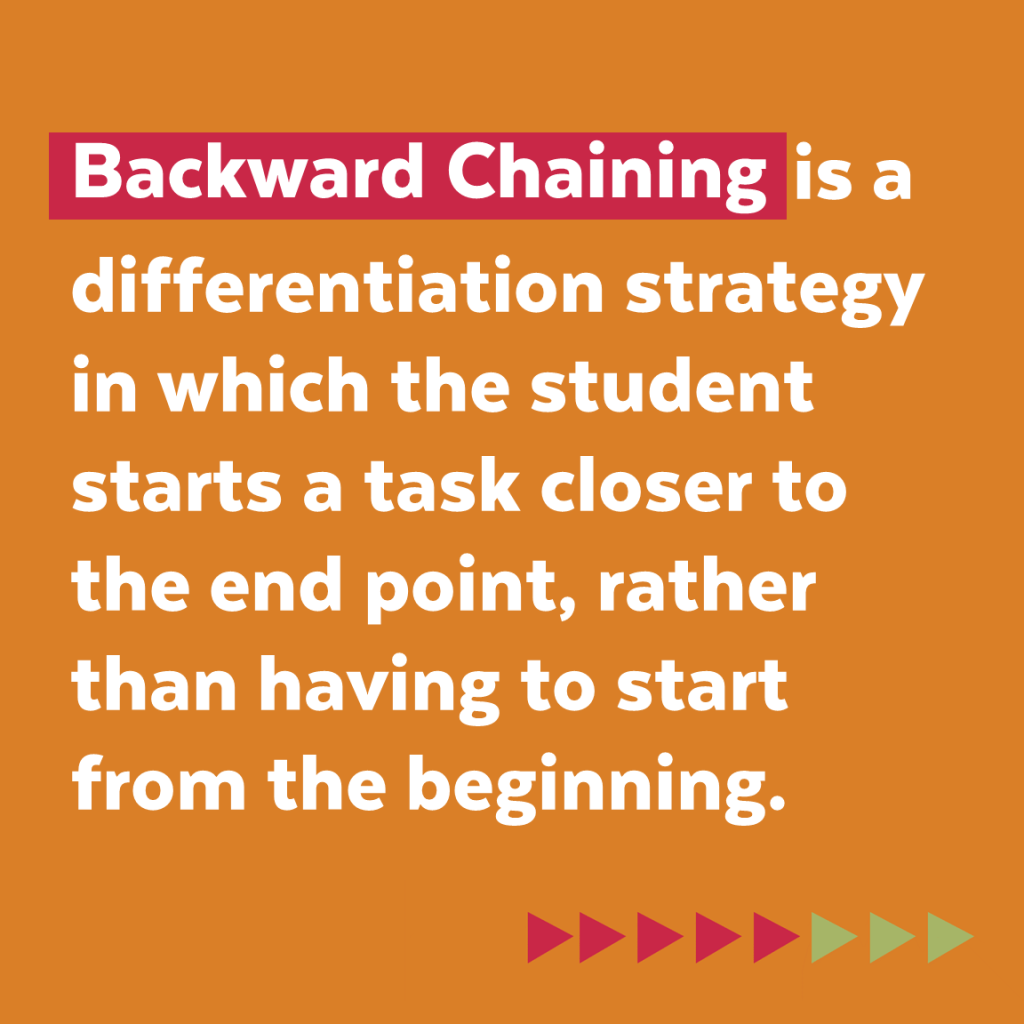


Although Meehan explains Backward Chaining as a differentiation strategy, it can also serve as the foundation of a UDL if all students are given the opportunity to self assess their current level of understanding and choose the place within the writing process that they would benefit from starting.

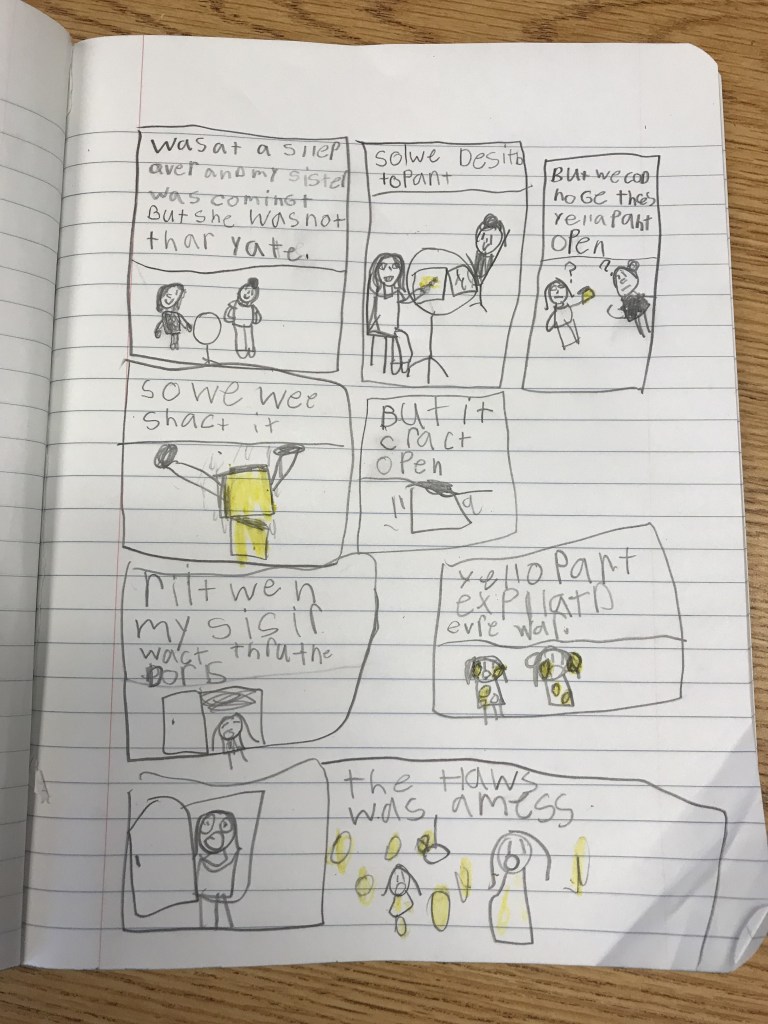
Now What?
Armed with an entirely new outlook on how to use Backward Chaining to teach writing, I am more excited than ever to apply this UDL to other units of study in writing and all other subjects!

Do you think the use of this design will benefit your students? How likely are you to try this strategy in your classroom? I would love to hear your thoughts!
ENJOY!
 Universal Digital Literacy Solutions, LLCoo IPO IPO oooooòoo ooo o ooo I I I ooo ooo I iio
Leave a comment