
Mary E. Pettit, NBCT, Ed.D, May 23, 2024

Ideas for Using Audiobooks as Part of a Universal Digital Literacy Design

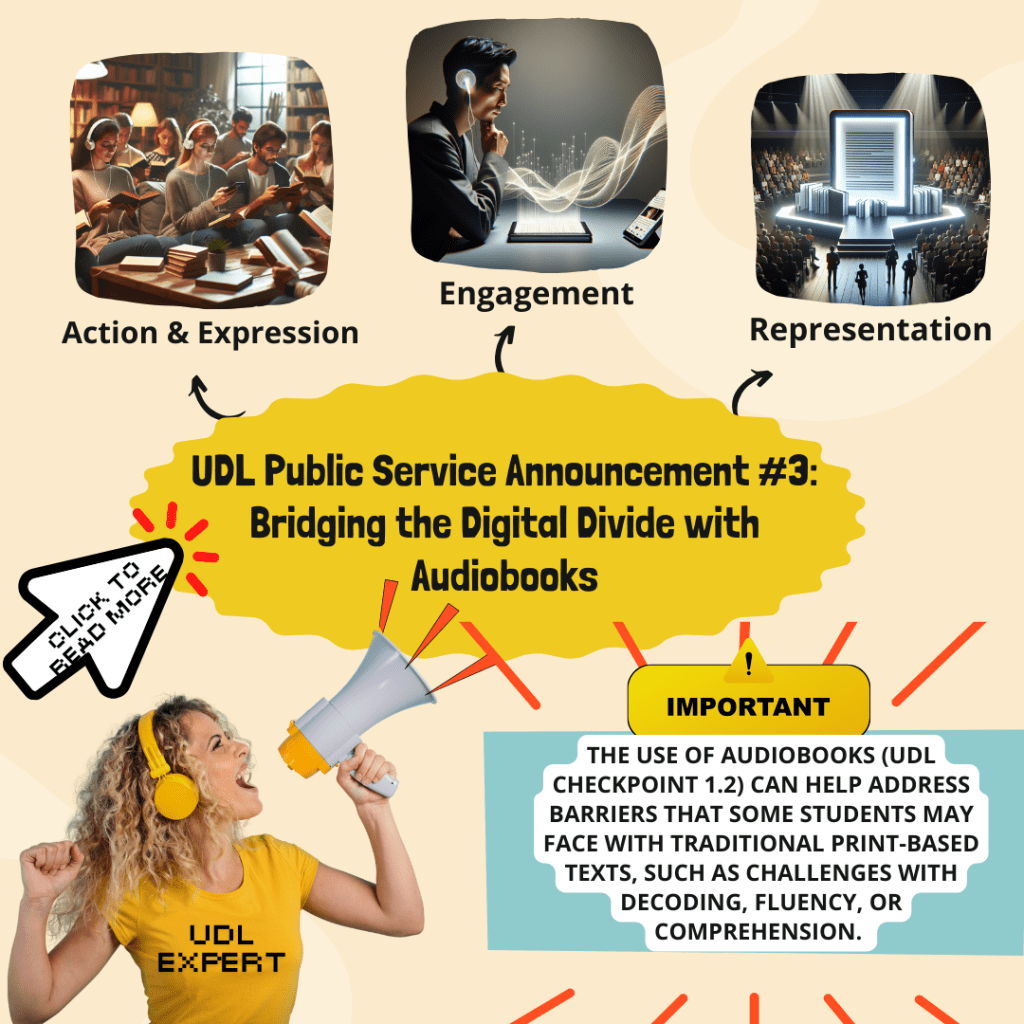
In line with Universal Design for Learning, incorporating audiobooks is an effective way to provide multiple means of representation and support diverse literacy needs in grades 3-5. The use of audiobooks (UDL Checkpoint 1.2) can help address barriers that some students may face with traditional print-based texts, such as decoding, fluency, or comprehension.
Here are some effective ways to use audiobooks as part of a UDL-aligned digital literacy design:
- Differentiated Instruction: Provide access to audiobook versions of classroom texts and literature alongside physical books. This gives students the option to read, listen, or engage with a combination of modalities.

Example: Students reading a novel in class have the option to follow along with the physical book or listen to the audiobook version, which can support struggling readers or English language learners.
- Scaffolding Comprehension: Integrate audiobooks with visual aids, such as digital subtitles or highlighted text, to reinforce connections between auditory and visual processing.

Example: Students listen to a nonfiction audiobook about the solar system, with the text highlighted and key terms displayed on the screen to aid comprehension.
- Fluency Practice: Use audiobooks as a model for fluent reading. Students can follow along with the text while listening, then practice reading aloud to build their own fluency.

Example: Students listen to an audiobook version of a short story, then take turns reading the same text aloud to the class, using the audiobook as a reference.
- Independent Reading: Encourage students to access audiobooks for independent reading assignments or during silent reading time. This can foster a love of reading and promote engagement.

Example: Students choose an audiobook from a curated digital library to listen to during their daily independent reading time.
Additional Considerations for Planning with Audiobooks:
Cultural Representation: Select audiobooks that feature diverse characters, settings, and perspectives representative of your students’ cultural backgrounds. Include audiobooks that explore themes and narratives from various cultural traditions and experiences. Avoid audiobooks that perpetuate stereotypes or present biased depictions of different cultures.
Example: For a class with a significant Hispanic/Latino population, choose audiobooks that feature Hispanic/Latino protagonists and explore themes relevant to that cultural experience.

Student Interests: Survey your students to understand their hobbies, passions, and preferred genres of literature. Provide a diverse selection of audiobook options that align with their interests, such as adventure, mystery, science fiction, or fantasy. Incorporate audiobooks that connect to current events, social issues, or academic topics that engage your students.
Example: If many of your students are interested in environmental science, offer audiobook versions of nonfiction titles that explore topics like climate change, endangered species, or sustainability.

Language Support: Provide audiobooks in students’ native languages, in addition to English, to support English language learners. Offer audiobooks with subtitles or closed captions to aid comprehension and language development. Consider bilingual audiobooks that present the content in both students’ native language and English.
Example: It is important to give UDL access to audiobook versions of classic children’s literature in both English and various other languages, especially with growing numbers of diverse student populations.

By thoughtfully selecting audiobook content that aligns with your students’ cultural backgrounds, interests, and language needs, you can create a more inclusive and engaging learning environment that supports their literacy development through the UDL framework.
 Universal Digital Literacy Solutions, LLCoo IPO IPO oooooòoo ooo o ooo I I I ooo ooo I iio
Leave a comment